


Whether you’re competing on the tennis court or simply staying active, keeping your body strong and healthy is essential to performing your best and continuing to enjoy the activities you love.
Sports injuries don’t always happen suddenly. Many develop gradually when muscles, tendons, and joints are repeatedly placed under more stress than they can recover from. The good news? Building strength, progressing gradually, prioritizing recovery, and listening to your body can all help reduce your risk of injury.
Cleveland Clinic Canada’s Sports Medicine and Rehabilitation experts share practical strategies to help athletes of all ages and levels stay active, recover well, and keep doing what they love.
Why do overuse injuries happen?
Dr. Ira Smith, a sports medicine physician, shared that overuse injuries occur when repetitive stress on muscles, tendons, bones, or joints exceeds the body’s ability to recover. In tennis, repeated serving, swinging, sprinting, and changing direction can place significant demands on the shoulders, elbows, knees, ankles, and lower back.
Young athletes can be particularly susceptible when they play the same sport year-round without enough breaks.
How can you reduce your risk of injury?
Build up gradually.
More isn’t always better. When starting a new sport, returning after a break, or increasing your training, give your body time to adapt. Avoid making large increases in both the intensity and duration of your activity at the same time.
Make strength training part of your routine.
Strength training isn’t just about building muscle. A stronger body is better equipped to handle the physical demands of sport and everyday life. For tennis players, strengthening the legs, core, shoulders, and upper body can help support the explosive movements, quick changes of direction, and repeated strokes the game requires.
Warm up before you play.
Instead of going straight from the car to the court, spend a few minutes preparing your body for movement. A dynamic warm-up that includes controlled movements through your range of motion can help prepare your muscles and joints for activity.
Where does stretching fit in?
Flexibility and mobility are important components of an active lifestyle. Regular stretching can support flexibility, balance, range of motion, strength, and endurance.
Dynamic stretches, such as arm circles, leg swings, or controlled lunges, are well suited to warming up before activity because they prepare your body for movement. Static stretches, where you hold a position for a period of time, are generally better suited to cooling down after exercise.
What about recovery?
Your body needs time to repair and adapt after physical activity. Rest days, adequate sleep, proper nutrition, hydration, and varying your activities can all support recovery.
Most importantly, listen to your body. Persistent pain, unusual fatigue, or declining performance may be signs that you need to reduce your activity and give your body additional time to recover.
What are the key takeaways for staying active and injury-free?
- Progress gradually. Give your body time to adapt when increasing the duration, frequency, or intensity of activity.
- Build strength. Incorporate resistance training to support your muscles, bones, balance, and overall resilience.
- Warm up and stretch strategically. Use dynamic movement before activity and incorporate static stretching into your cool-down and recovery routine.
- Make recovery a priority. Rest, sleep, hydration, nutrition, and variety in your training all matter.
- Listen to pain. Don’t repeatedly push through pain or persistent discomfort. Early assessment can help prevent a minor issue from becoming a longer-term injury.
- Keep it enjoyable. Staying active consistently is more important than pushing yourself beyond what your body can manage.
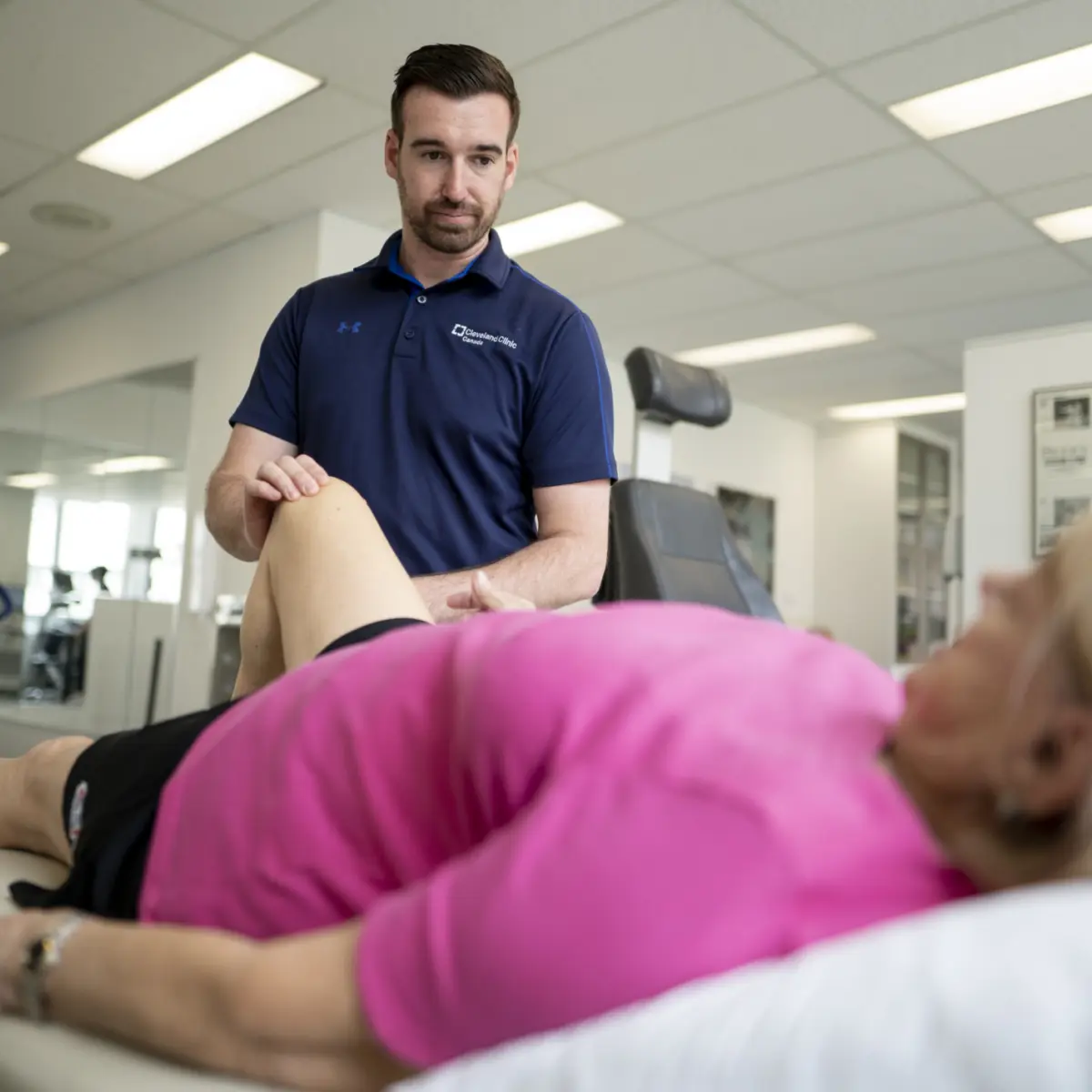
If pain or injury is keeping you on the sidelines, Cleveland Clinic Canada’s Sports Medicine and Rehabilitation team provides personalized care for athletes of all ages and abilities at both of their Downtown Toronto clinics. Services include sports medicine, physiotherapy, chiropractic care, massage therapy, strength and conditioning, osteoarthritis programs, and therapeutic injections to help patients recover, restore function, and safely return to the activities they enjoy.
Want to learn more about how tennis impacts your body? WATCH THIS VIDEO to see how NBO Director Karl Hale gained valuable insights into his health and sports performance during his recent health assessment at Cleveland Clinic Canada.
Cleveland Clinic Canada is proud to be the Official Health Partner of Tennis Canada and the National Bank Open. Our Sports Medicine and Rehabilitation experts help athletes at every level move better, recover from injury, and stay active for years to come.
The Davis Cup is coming to Quebec City September 18 and 19 as Team Canada hosts France in the Davis Cup Qualifiers Second Round. Tickets are on sale now. CLICK HERE TO BUY YOUR TICKETS!
Feature Photo: Cleveland Clinic Canada